
Heritage Forum
Home / Heritage Forum
ALL | AWARDS | ESSAYS & OPINIONS | CONTEMPORARY ARCHITECTURE | ARCHITECTS | NEWS | GALLERIES | VIDEOS

Heritage law expounded
On October 30, 2014, Corlie Smart will talk about what interested persons should know concerning South African heritage law. The title of her lecture is: “What you should know about heritage law: practical discussion and illustrations of the National Heritage Resources Act”.

Thinking anew about shared heritage
On 14 October Professor Fabio Todeschini will be talking about ways in which it is appropriate to speak about the preservation, management and value of our shared heritage. He uses the Cape and in particular the Stellenbosch Winelands as the focus in his lecture.

Film screenings
Some of the world’s best documentary films on architecture, urban design and heritage will be screened in Stellenbosch from October onwards.

Stellenbosch water colours by Piet Dekker
Stellenbosch architect Piet Dekker exhibits water colour works of Stellenbosch at the Johan Coetzee Art Gallery on the corner of Plein and Ryneveld Streets, from 16 to 18 October 2014. Previews can be arranged on request at the gallery.

The world’s most liveable city
The annual search by the magazine Monocle for the world’s most liveable cities has found that Copenhagen is where people want to be for the second consecutive year.

The world’s architects in Durban
Jolanda Morkel, vice chairperson of the Stellenbosch Heritage Foundation, was a delegate to the recent conference of the Architectural Association in Durban. The triennial congress of the International Union of Architects (UIA), commonly known as the World Cup event for Architecture, attracted 4500 delegates from around the world.

World Heritage benefits from American Express
Nine historical monuments in urgent need of repair – in China, France, Spain, Japan, Italy, Tanzania, England and Mexiko – all on the World Monuments Fund (WMF) list of monuments under threat, are benefiting this year from a donation of $5 million to WMF by American Express.

Stellenbosch favourites
Which Stellenbosch buildings are the most spectacular? Some Stellenbosch inhabitants listed their preferences.

Residence, Mostertsdrift
This existing family residence situated in the centre of Stellenbosch required the addition of a new guest wing & studio space. The site was already predetermined based on the current layout of the existing house but with a 100year old wild olive tree falling in between the site and the existing houses. This posed a slight complication of how to resolve the linking of the 2 spaces and became a positive restriction as it resulted is the new addition becoming a garden pavilion which meant that its design would minimally interfere with the aesthetics of the current house design done in the late 1950’s by the well known Pius Pahl.

Tuinhuis, Die Laan
The building design is simple, reflecting the traditional white walled architecture but producing a modern building in sympathy to the existing 1900 historical building. 3D studies showed that a conventional double storey building was not appropriate next to the garden and the historic building.

Metalwork, Outdoor Art Exhibition
The aim of the Stellenbosch Outdoor Sculpture Trust with Metalwork: Public Art in Stellenbosch II is to create public awareness of the interplay between art, architecture and public spaces, make art accessible to everybody, and bring established artists and new talent to the people.

Kom Sit, Outdoor Art Exhibition
24 concrete benches are “canvases” for 24 artists and craftspeople to produce works of functional art.

Van der Stel Street
This late 1950’s home, previously known as Huis Paauw, is situated in one of Stellenbosch’s established suburbs and forms part of the residential collection of works designed by the late German architect Pius Pahl.
Knowing the history of the house the project teams design approach was to retain and refurbish the original house and look carefully at how the new brief could be sensitively added.

Help beplan die toekoms van Stellenbosch
Help beplan die toekoms van ons dorp!
Nou kan jy help bou aan ’n beter toekoms vir die dorp Stellenbosch met die veldtog Shaping Stellenbosch
Shaping Stellenbosch is ’n veldtog van Stellenbosch Munisipaliteit om Stellenbossers se idees in te win en dit dan by ’n nuwe dorpsplan vir die dorp Stellenbosch in te sluit – ’n plan vír die dorp, déúr die dorp!

Courtyard House
The design includes a number of “green” elements, such as water recycling, storage tanks and passive water heating systems, but this has been incorporated into the design without compromising architectural aesthetics.
Another concept of the plan was to arrange and express the elements of the building, namely the boundary wall, garden strip, building outer shell, the inner shell, passage, courtyard, pool and garden, as layers. This layering of spaces and elements allows for an interesting spatial experience as one circulates through the building.

Is Stellenbosch a city? Or a town with the problems of a city?
The spatial development framework is a compass for development. A new framework is being drafted. In this process we have to imagine the future Stellenbosch anew.
Participate…
Everyone may take part in setting up a new spatial development framework for Stellenbosch.
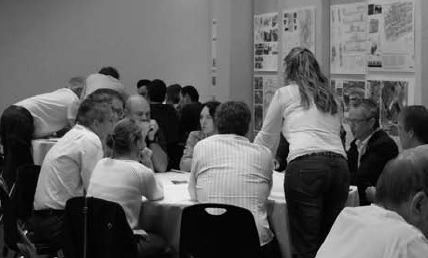
Thinking around renewal
Ideas for renewal in the Stellenbosch town centre, Jonkershoek and Khayamandi by local and international urban designers and architects were explained at the Heritage Foundation’s annual general meeting by Professor Henri Comrie and Master’s degree students from the School for Urban Design at the University of Cape Town.

R44: a high speed route?
The point of departure of the suggested further development of the R44 from Somerset West, as a high-speed approach route to Stellenbosch, is controversial. Could better collaboration between local and provincial authorities mean that R480 million may be spent better?
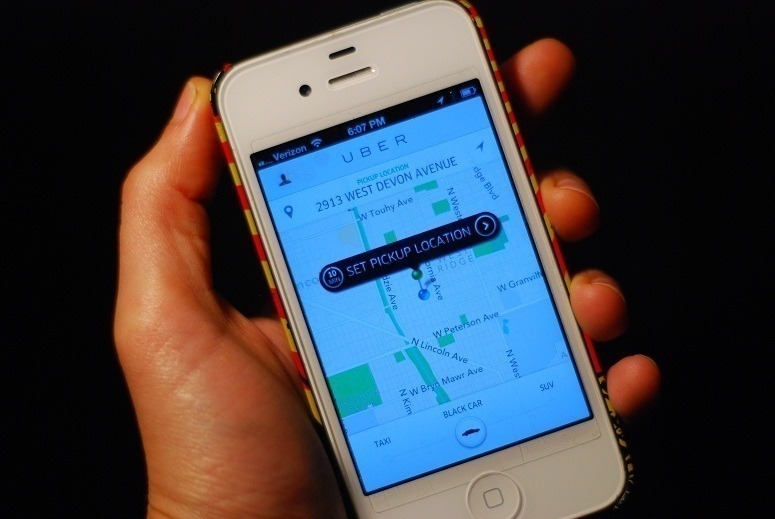
Does innovation point the road ahead?
Uber, the ride-providing service, has beaten growth records for new enterprises when it gained a valuation of R180 billion within four years. Uber was the first to combine particular building blocks of new technology like smart phones, broadband and GIS to offer a new riding service. It exists in approximately forty countries and is reported to create 20 000 new job opportunities daily. Transport experts expect that families in cities where Uber is available will be able to manage with one instead of two cars.
Impetus for architecture, in Britain
Architecture is as important as health and food. This is the opinion of the chairperson of the British Farrel commission that was appointed in 2013 to investigate the status of architecture and the built environment in that country. The study commissioned by the British minister for architecture makes recommendations on quality of design, cultural heritage, economic utilisation and other issues that could have an impact on urban development in Britain in the future. Some of these recommendations are also relevant in South Africa.
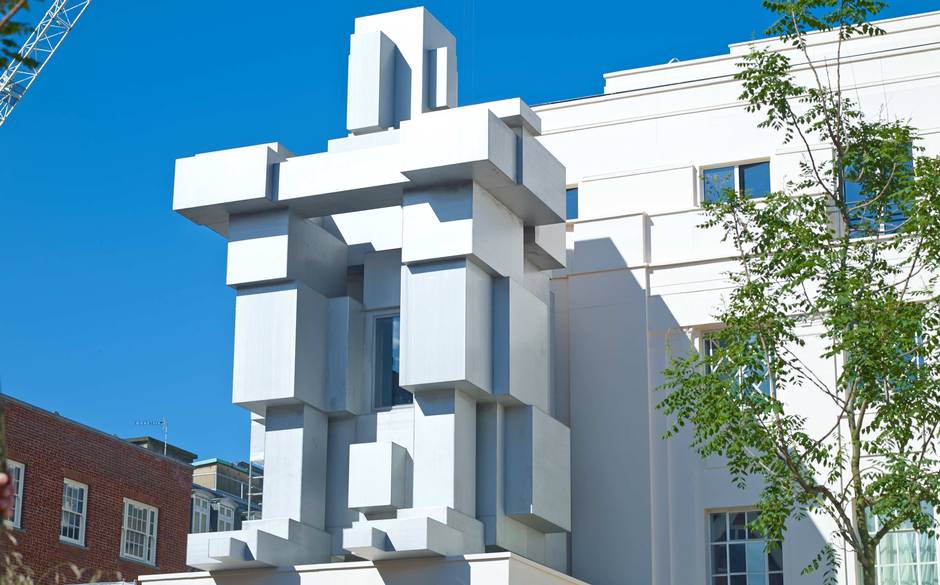
Habitable sculpture
Grosvenor, a British developer, has unveiled a habitable sculpture by the sculptor Antony Gormley. Room, a three-storey-high stainless steel sculpture forms part of a luxurious new hotel in a conservation area in the inner city of London.

Writer on architecture awarded the Pulitzer Prize
For only the sixth time ever, a writer on architecture has been awarded the Pulitzer Prize for criticism. Inga Saffron of the Philadelphia Enquirer hereby ensured her place alongside Ada Louise Huxtable, Paul Goldberger and Blair Kamin. Saffron has been with the...
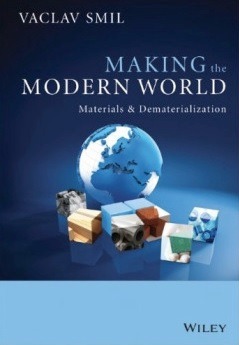
Bill Gates on the building materials of the modern world
In his latest book review – the world’s wealthiest man reads widely and regularly writes reviews – Bill Gates highlights astonishing statistics on the use of concrete: – China has used more concrete over the past three years than that used in America over the previous century. This massive use of concrete to build new cities has enabled China to relieve the poverty of millions of people.

Upgrading and Reblocking – Exercises in hope
Supplying houses in South Africa is hampered by inadequate resources, but also by rigid systems supported by obsolete ways of thinking and doing. Meanwhile, there is progress with smart ways to improve informal settlements and replanning them inclusively. Read more about the experiences of architects Julian Cooke and Olwethu Jack…

Design: a moral enterprise?
The architect Michael B. Lehrer describes design as a moral enterprise, finding beauty in chaos and in places where people usually don’t look for value. He illustrates his view of designers’ moral enterprise with examples of award-winning work:

Wales offers a virtual model for Farrell’s ‘urban rooms’
The Design Commission for Wales’ new website aims to empower communities, says Carole-Anne Davies. One of the main themes of the Farrell Review is the need for a new level of public engagement through education and outreach in every village, town and city.
Elements of building in the starring role in Venice
The architecture writer Charles Jencks, one of Rem Koolhaas’ former lecturers, indicates in an interview in Architectural Review that everything is becoming smaller and lighter.
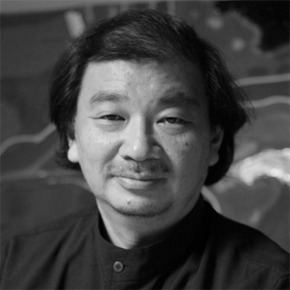
Pritzker architecture prize goes to Shigeru Ban
The Japanese architect Shigeru Ban is the 2014 winner of the Pritzker prize, architecture's Nobel prize. Ban is well known for museums and other architectural icons across the world, but is also well-known for making temporary housing out of materials like paper tubes...

International think tank on planning in Stellenbosch
Workshops on planning for the Stellenbosch town centre, Jonkershoek and Khayamandi form part of an international conference to be held in Stellenbosch during the current month. Local and international planners, urban designers and architects will be combining...